Sidecar
A crisp, citrusy Cognac classic that perfectly balances sweetness and acidity.
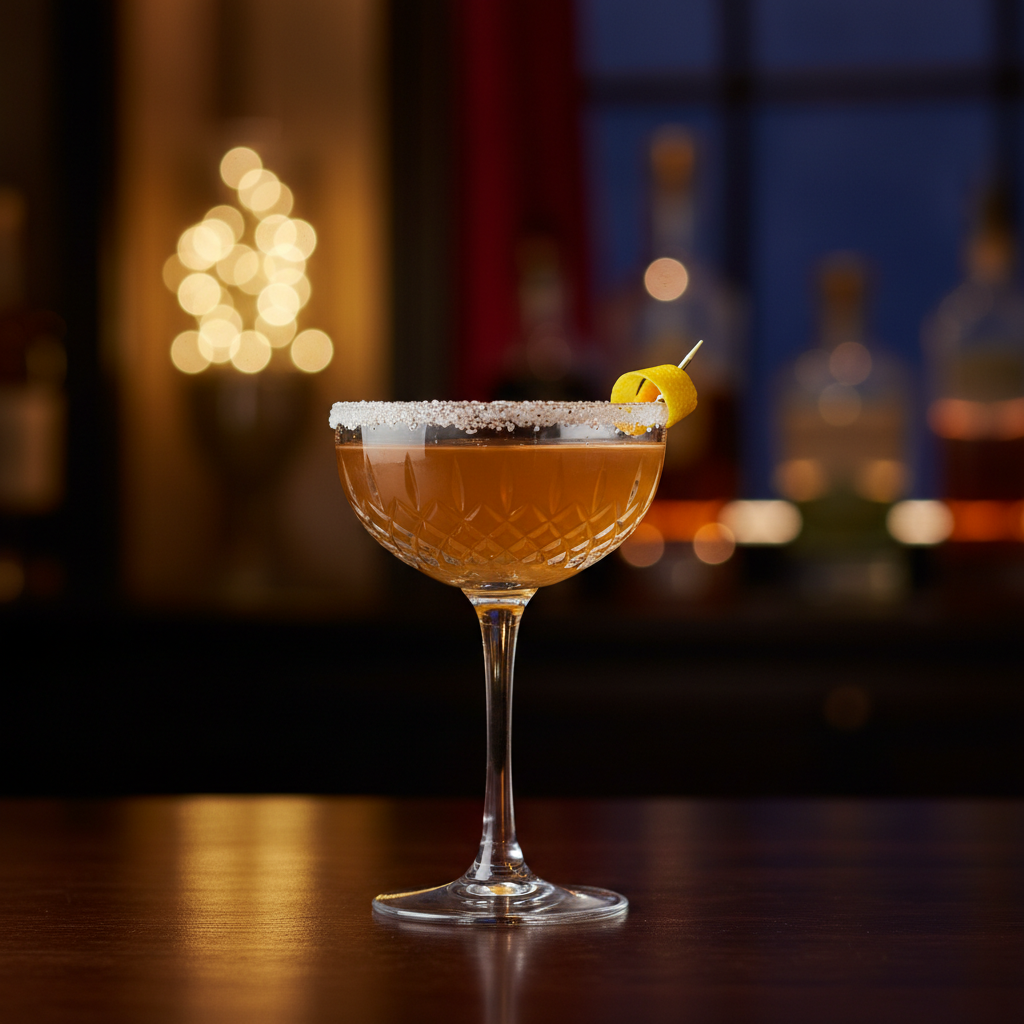
Ingredients
- 50 ml Cognac
- 20 ml Triple Sec
- 20 ml Fresh Lemon Juice
Garnish: Optional: lemon twist or sugared rim
The Sidecar is one of the great, crisp Cognac sours of classic cocktail history. With just three main ingredients—Cognac, triple sec, and fresh lemon juice—it delivers a bright, citrusy profile wrapped in the warmth and complexity of aged brandy.
Elegant yet straightforward, the Sidecar is a benchmark of balance: sweet orange notes from the triple sec, sharp acidity from the lemon, and rich structure from the Cognac. It is a perfect aperitif, cutting through the palate while remaining smooth and sophisticated.
Recognized by the International Bartenders Association (IBA) as an official cocktail, the Sidecar is essential for anyone looking to master the fundamentals of shaken sours and classic French-inspired mixology.
Instructions
Official Recipe:
- Chill a Cocktail Glass by placing it in the freezer or filling it with ice and water while you prepare the drink.
- Measure 50 ml Cognac, 20 ml triple sec, and 20 ml fresh lemon juice into a cocktail shaker.
- Fill the shaker with plenty of ice cubes, almost to the top.
- Shake vigorously for about 10–12 seconds until the shaker feels very cold on the outside.
- Discard the ice or water from the chilled Cocktail Glass if you used it to chill the glass.
- (Optional) Rim the glass: lightly moisten the rim with a lemon wedge and dip it into fine sugar for a sugared rim.
- Strain the mixture through a strainer into the chilled Cocktail Glass, ensuring a smooth, ice-free pour.
- Garnish with a thin lemon twist if desired, or serve ungarnished for a minimalist classic look.
Note: Adjust sweetness by slightly increasing or decreasing the triple sec or lemon juice according to your taste, while keeping the total volume similar.
Tips
- Use quality Cognac: The Cognac is the backbone of the Sidecar. Choose a VSOP or similar quality for richer body and complexity without overpowering the citrus.
- Fresh lemon only: Always squeeze fresh lemon juice. Bottled juice will mute the brightness and make the drink feel flat.
- Cold, hard ice: Use large, solid ice cubes for shaking. They dilute less and chill faster, giving you a crisp, refreshing cocktail with good texture.
- Balanced rim: If you choose a sugared rim, keep it light and even. A full, thick sugar crust can dominate the first sips and hide the delicate balance.
- Proper shake: Shake firmly and briefly (10–12 seconds). You want good aeration and dilution without letting the drink warm up.
- Fine strain for elegance: If you want a silkier texture, double strain through a fine mesh strainer to remove tiny ice shards and pulp.
- Serve immediately: The Sidecar is best ice-cold. Pour and serve right away to preserve its bright, zesty character.
Classic Variations
- Sugar-Rimmed Sidecar: The most familiar version, with a light sugar rim that softens the sharp citrus and adds a touch of texture.
- Brandy Sidecar: Made with quality brandy instead of Cognac—slightly less opulent but still very flavorful and more accessible.
- Sidecar Royale: Topped with a splash of Champagne or sparkling wine for a festive, bubbly twist.
- Bourbon Sidecar: Cognac is replaced with bourbon, giving a rounder, vanilla-forward profile while keeping the same structure.
- Calvados Sidecar: Uses Calvados (apple brandy) for an autumnal, fruity interpretation.
Flavor Profile
On the first sip, you get a bright, zesty hit of lemon supported by sweet orange notes from the triple sec. The sugared rim, if used, adds an immediate soft sweetness at the lips.
On the mid-palate, the Cognac takes over, bringing warmth, dried fruit, vanilla, and oak tones that deepen the cocktail beyond a simple sour.
On the finish, the acidity lingers pleasantly, cleansing the palate, while subtle brandy and orange notes remain. The overall impression is dry to off-dry, crisp, and sophisticated, with a refreshing, clean aftertaste.
History
The Sidecar emerged in the early 20th century and is commonly associated with the period around World War I. While its exact origin is debated, two major claims dominate: one places its birth at Harry’s New York Bar in Paris, and another at Buck’s Club in London. Both stories connect the drink to an army officer who supposedly arrived at the bar in a motorcycle sidecar—hence the name.
By the 1920s, the Sidecar had become a symbol of the cosmopolitan cocktail culture in Paris and London. It was immortalized in early cocktail books such as Harry MacElhone’s “Harry’s ABC of Mixing Cocktails” and Robert Vermeire’s “Cocktails: How to Mix Them,” often with slightly differing proportions that leaned drier or sweeter.
Today, the Sidecar is recognized as an official IBA cocktail, considered one of the definitive Cognac classics alongside the likes of the Sazerac and the French Connection. Its enduring popularity lies in its simplicity, elegance, and the perfect harmony of spirit, citrus, and sweetness.
Cheers!