New York Sour
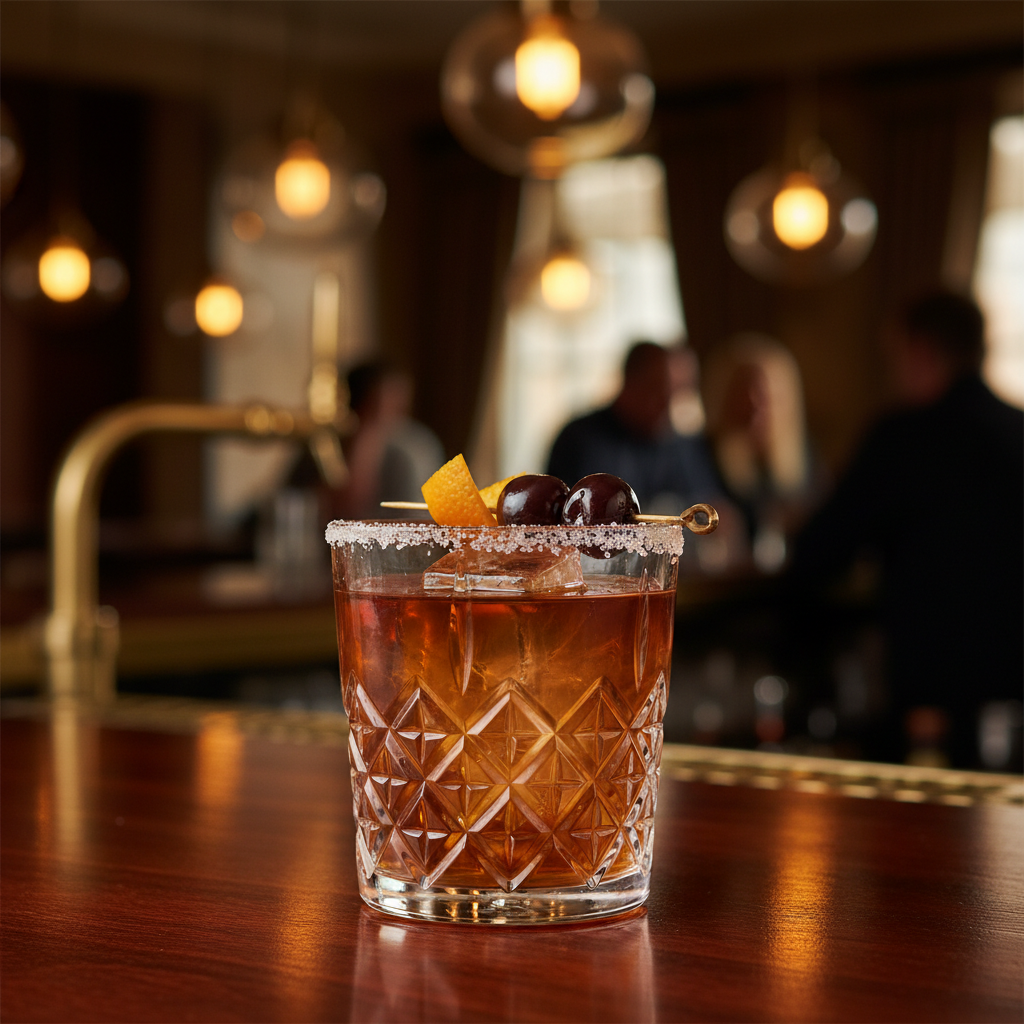
A bold whiskey sour crowned with a silky red wine float for a striking two-tone classic.
Ingredients
- 60 ml Rye whiskey or Bourbon
- 22.5 ml Simple syrup
- 30 ml Fresh lemon juice
- A few drops of egg white (optional but recommended)
- 15 ml Red wine (Shiraz or Malbec)
Garnish: Lemon or orange zest and a cherry
The New York Sour is an elegant twist on the classic Whiskey Sour, instantly recognizable thanks to its deep red wine float that sits dramatically on top of the drink. Built on a foundation of rye whiskey or bourbon, fresh lemon juice, and simple syrup, it balances sweetness and acidity with the warmth of American whiskey.
A few drops of egg white (or a small amount of aquafaba as an alternative) add a silky texture and a creamy foam layer, while the red wine float contributes both visual impact and complex fruit and tannin notes. The result is a cocktail that feels sophisticated yet approachable, perfect for impressing guests without requiring advanced bar equipment.
This drink is officially recognized by the IBA (International Bartenders Association), which cements its status as a modern classic. Whether you love whiskey or simply enjoy visually striking cocktails, the New York Sour deserves a permanent place in your repertoire.
Instructions
Official Recipe:
- Chill a rocks glass by filling it with ice or placing it in the freezer for a few minutes.
- Add the rye whiskey or bourbon, fresh lemon juice, simple syrup, and a few drops of egg white into a shaker.
- Dry shake (shake without ice) vigorously for about 10 seconds to emulsify the egg white and create a fine foam.
- Add plenty of ice to the shaker and shake again vigorously for 10–15 seconds until well chilled.
- Discard the ice from the chilled rocks glass and fill it with fresh ice cubes.
- Strain the mixture into the rocks glass, using a fine strainer if you want an extra-smooth texture.
- Float the red wine gently on top by slowly pouring it over the back of a bar spoon so it forms a separate layer.
- Garnish with a twist of lemon or orange zest, expressing the oils over the surface, and add a cherry.
Note: If you prefer to avoid raw egg white, you can use pasteurized egg white from a carton or 10–15 ml of aquafaba (chickpea brine) as a vegan alternative.
Tips
- Choose a characterful whiskey: Rye whiskey will give a spicier, drier profile, while bourbon adds more sweetness and vanilla notes. Both work beautifully.
- Use fresh lemon juice: Bottled lemon juice dulls the cocktail. Freshly squeezed juice delivers the brightness and acidity that define a proper sour.
- Balance your simple syrup: A standard 1:1 simple syrup (equal parts sugar and water) is ideal. If you use richer syrup (2:1), reduce the quantity slightly to avoid an overly sweet drink.
- Perfect your dry shake: A vigorous dry shake is the key to a thick, stable foam when using egg white. Wrap a towel around the shaker if needed for better grip.
- Float the wine slowly: Use a bar spoon and pour the wine gently over its back to create a clean, defined layer instead of mixing it into the drink.
- Serve well chilled: Both the glass and the cocktail should be very cold to keep the layered effect crisp and the texture refreshing.
- Select the right wine: A dry, fruity red like Shiraz or Malbec with good body and color will give the most striking appearance and flavor contrast.
Classic Variations
- New York Sour (No Egg White): Omit the egg white for a lighter, more straightforward version that focuses on the whiskey and wine contrast.
- Smoked New York Sour: Use a smoky whiskey or add a small rinse of peated whisky to introduce a subtle smoky dimension.
- Maple New York Sour: Replace simple syrup with maple syrup for a richer, more autumnal flavor profile.
- Berry New York Sour: Muddle a few fresh berries in the shaker before adding the other ingredients to enhance the fruit notes.
- Amaro New York Sour: Add 7.5–10 ml of a bitter liqueur (such as Amaro or Aperol) for extra complexity and herbal depth.
Flavor Profile
On the first sip, you encounter bright lemon acidity and soft, creamy texture from the egg white, cushioned by the sweetness of simple syrup. The mid-palate reveals the character of the whiskey—spice and dryness from rye or caramel and vanilla from bourbon—intertwined with the fruity, slightly tannic notes of the red wine.
The finish is long and layered: citrus and gentle sweetness fade into red fruit, oak, and a hint of bitterness from the wine. The wine float evolves as you drink, gradually integrating and changing the balance with each sip.
History
The New York Sour has its roots in the late 19th century, evolving from the classic Whiskey Sour, which dates back to at least the 1860s. The idea of adding a red wine float likely emerged in the United States, with some sources pointing to bartenders in Chicago or New York experimenting with a “continental” twist by adding claret (red wine) to their sours.
Despite the name, its exact origin in New York City is not definitively documented, but the city’s vibrant bar culture certainly helped popularize it. Over time, the New York Sour became known for its show-stopping appearance and refined balance, securing its place on cocktail menus around the world.
Today, the New York Sour is listed as an official IBA (International Bartenders Association) cocktail in the “New Era Drinks” category, confirming its status as a modern classic and a benchmark for showcasing both technique and presentation in a whiskey sour.
Cheers!