Manhattan
A timeless whiskey cocktail that balances spicy rye, sweet vermouth, and aromatic bitters in pure elegance.
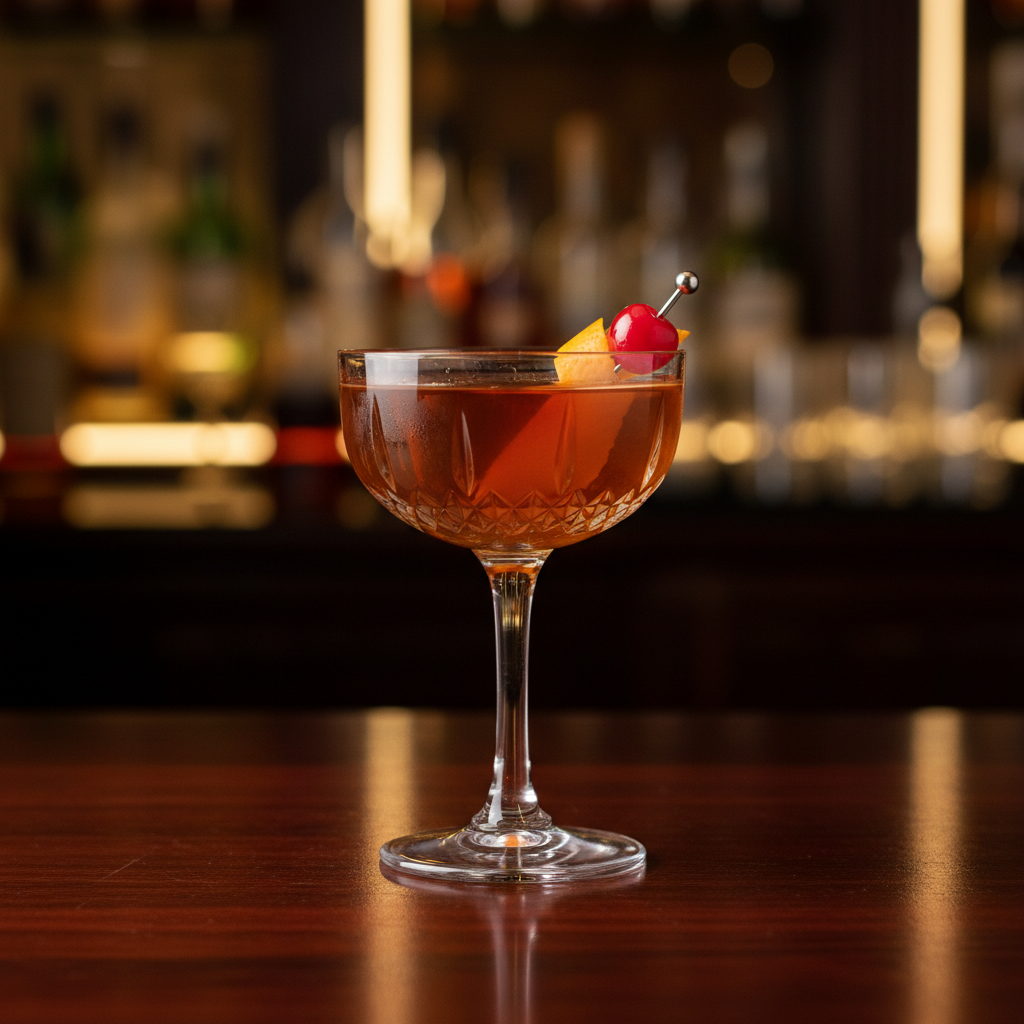
Ingredients
- 50 ml Rye Whiskey
- 20 ml Sweet Red Vermouth
- 1 dash Angostura Bitters
Garnish: Cocktail cherry on a pick
The Manhattan is one of the pillars of classic cocktail culture: spirit‑forward, elegant, and endlessly sophisticated. Built on spicy rye whiskey, rounded by sweet red vermouth, and sharpened with a dash of Angostura bitters, it is the very definition of a well‑balanced, stirred drink.
Served up in a chilled cocktail glass with a single cherry, the Manhattan is all about clarity and precision. No juice, no soda, no dilution beyond what the ice provides in the mixing glass. Every detail—from the choice of whiskey to the style of vermouth—has a direct impact on the final result.
This drink is a perfect introduction to spirit‑forward cocktails and a benchmark for understanding balance between sweetness, bitterness, and the warmth of aged spirits.
Instructions
Official Recipe:
- Chill the cocktail glass in the freezer or by filling it with ice and water while you mix the drink.
- Add 50 ml rye whiskey, 20 ml sweet red vermouth, and 1 dash Angostura bitters into a mixing glass.
- Fill the mixing glass with plenty of fresh ice cubes, almost to the top.
- Stir gently but thoroughly for 20–30 seconds, until the mixing glass feels very cold and the drink is properly diluted.
- Discard the ice and water from the chilled cocktail glass if you used them to chill it.
- Strain the mixture into the chilled cocktail glass using a strainer to keep the ice out.
- Garnish with a cocktail cherry on a pick, placed in the center of the glass.
Note: A Manhattan is always stirred, never shaken, to keep it clear and silky.
Tips
- Choose a bold rye: Use a flavorful rye whiskey (at least 40–45% ABV) so it stands up to the sweetness of the vermouth.
- Use fresh vermouth: Sweet vermouth is a fortified wine; once opened, keep it in the fridge and use within 4–6 weeks for best flavor.
- Control dilution: Stir just long enough to chill and dilute—over‑stirring can make the drink thin, under‑stirring leaves it hot and harsh.
- Adjust sweetness: If you prefer a drier Manhattan, reduce the vermouth slightly or use a higher‑proof rye; for a sweeter style, add 5 ml more vermouth.
- Bitters matter: Angostura is classic, but a second dash or a mix of aromatic bitters can add depth—start with one dash and adjust to taste.
- Perfect temperature: Use plenty of solid, cold ice for stirring; small or wet ice melts too fast and throws off the balance.
- Garnish quality: Use a high‑quality cocktail or Maraschino cherry, not artificially flavored bright red cherries.
Classic Variations
- Perfect Manhattan: Equal parts sweet and dry vermouth instead of only sweet vermouth, for a drier, more herbal profile.
- Dry Manhattan: Uses dry vermouth instead of sweet, typically garnished with a lemon twist instead of a cherry.
- Rob Roy: Scotch whisky replaces rye whiskey, giving a smokier, malt‑driven character.
- Black Manhattan: Sweet vermouth is partially or fully replaced with amaro (often Averna) for a darker, more bitter edge.
- Brandy Manhattan: Brandy stands in for rye, softening the drink and highlighting fruity notes.
Flavor Profile
On the first sip, the Manhattan opens with the warmth and spice of rye whiskey—peppery, slightly dry, and assertive. The sweet vermouth quickly follows, bringing notes of red fruit, vanilla, and subtle herbs.
In the mid‑palate, the bitters tie everything together with clove, cinnamon, and gentle bitterness, adding structure and complexity. The texture is smooth, silky, and weighty without being heavy.
The finish is long and warming, with lingering rye spice, herbal sweetness from the vermouth, and a faint, pleasant bitterness from the Angostura that invites another sip.
History
The Manhattan is one of the oldest and most iconic cocktails in the world, widely believed to have originated in New York City in the late 19th century. Its exact origin story is debated—one famous but likely apocryphal tale credits its creation to the Manhattan Club in the 1870s for a banquet hosted by Lady Randolph Churchill.
What is certain is that the Manhattan quickly became a benchmark of American cocktail craft, codifying the template of spirit + fortified wine + bitters. Originally, it was often made with American whiskey of various styles, but rye eventually became the classic choice due to its spicy character.
Today, the Manhattan is recognized as an official IBA (International Bartenders Association) cocktail, served in bars around the world and treasured by professionals as a test of technique and balance. Mastering a well‑made Manhattan is essential for any serious bartender or cocktail enthusiast.
Cheers!