Black Russian
A dark, spirit-forward blend of vodka and coffee liqueur, the Black Russian is a minimalist classic with maximum character.
Ingredients
- 50 ml Vodka
- 20 ml Coffee Liqueur
Garnish: No garnish, or an optional lemon twist for aroma
The Black Russian is a timeless two-ingredient classic that proves how simple a great cocktail can be. With just vodka and coffee liqueur, it delivers deep roasted notes, a pleasant sweetness, and a clean, spirit-forward finish. It is as at home in a sophisticated cocktail bar as it is as a straightforward nightcap.
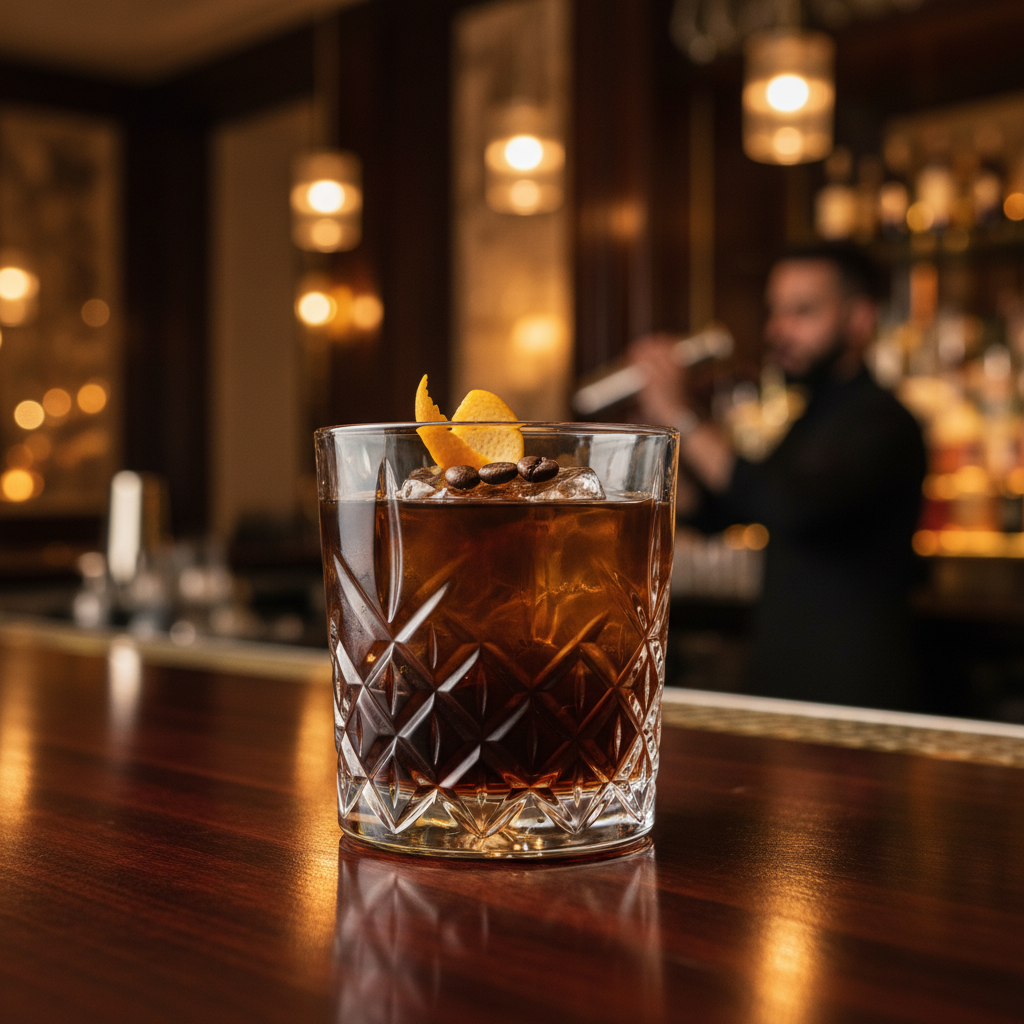
Served over ice in an Old Fashioned glass, the Black Russian is rich, dark, and aromatic. The coffee liqueur provides body and sweetness, while the vodka lifts and lengthens the flavors, preventing the drink from becoming cloying. It is especially popular as an after-dinner drink, but its simplicity makes it suitable for almost any occasion.
Officially recognized by the International Bartenders Association (IBA), the Black Russian is also the base for several famous variations, including the beloved White Russian. If you enjoy coffee flavors and bold, minimalistic cocktails, this drink deserves a place in your repertoire.
Instructions
Official Recipe:
- Fill an Old Fashioned Glass with fresh ice cubes.
- Pour 50 ml vodka directly over the ice.
- Add 20 ml coffee liqueur (such as Kahlúa) to the glass.
- Stir gently for 5–10 seconds to combine and chill without over-diluting.
- Serve immediately, optionally adding a small lemon twist if desired.
Note: The IBA recipe is built directly in the glass and usually served without garnish.
Tips
- Choose a quality vodka: A clean, neutral vodka with a smooth finish keeps the drink elegant and prevents any harsh aftertaste.
- Balance with coffee liqueur: If you prefer a drier cocktail, reduce the coffee liqueur slightly; for a sweeter, richer drink, increase it by 5–10 ml.
- Use solid, clear ice: Large, dense ice cubes melt more slowly, keeping the drink cold and preventing it from becoming overly diluted.
- Mind the stirring time: A short, gentle stir is enough. Over-stirring will thin out the texture and mute the coffee notes.
- Experiment with coffee liqueurs: Different brands vary in sweetness and intensity; taste and adjust ratios to find your ideal balance.
- Optional citrus accent: A thin lemon twist expressed over the surface adds a subtle brightness that contrasts nicely with the dark, roasted flavors.
- Serve as a digestif: Present it after dinner in a chilled Old Fashioned Glass to highlight its dessert-like, coffee-forward character.
Classic Variations
- White Russian: Add a float of fresh cream (or lightly whipped cream) on top and stir in slowly for a richer, dessert-like version.
- Dirty Black Russian: Top with a splash of cola to add bubbles and extra sweetness.
- Black Magic: Add a dash of lemon juice and garnish with a lemon slice for a sharper, citrus-accented twist.
- Brown Russian: Replace part of the vodka with cream, yielding a slightly lighter, creamier take without fully becoming a White Russian.
- Blind Russian: Substitute Irish cream liqueur for coffee liqueur, creating a creamy, boozy alternative.
Flavor Profile
On the nose, the Black Russian offers intense aromas of roasted coffee, cocoa, and a hint of vanilla from the liqueur, underpinned by a subtle alcoholic lift from the vodka.
The initial taste is sweet, with rich coffee, chocolate, and caramel notes coating the palate. As it moves to the mid-palate, the vodka asserts itself, drying the sweetness slightly and adding structure and warmth.
The finish is smooth and lingering, with roasted coffee and cocoa notes remaining on the tongue and a gentle alcoholic warmth that makes it ideal as a sipping cocktail.
History
The Black Russian is widely believed to have been created in 1949 by Belgian bartender Gustave Tops at the Hotel Metropole in Brussels. It was reportedly mixed for Perle Mesta, the American ambassador to Luxembourg, who was known for her glamorous parties and love of fine drinks.
Despite its name, the cocktail is not Russian, but the presence of vodka—Russia's most famous spirit—inspired the association. The “black” refers to the dark color contributed by the coffee liqueur. Over time, the drink gained popularity internationally, especially during the mid-20th century when vodka-based cocktails became fashionable.
Today, the Black Russian is listed as an official IBA cocktail and is recognized as the foundation for many popular variations, most notably the White Russian, which achieved cult status in popular culture. Its enduring appeal lies in its simplicity, bold flavor, and versatility as both an aperitif and a digestif.
Cheers!