Daiquiri
A crisp, perfectly balanced Cuban rum sour that celebrates lime, sugar, and white rum in their purest form.
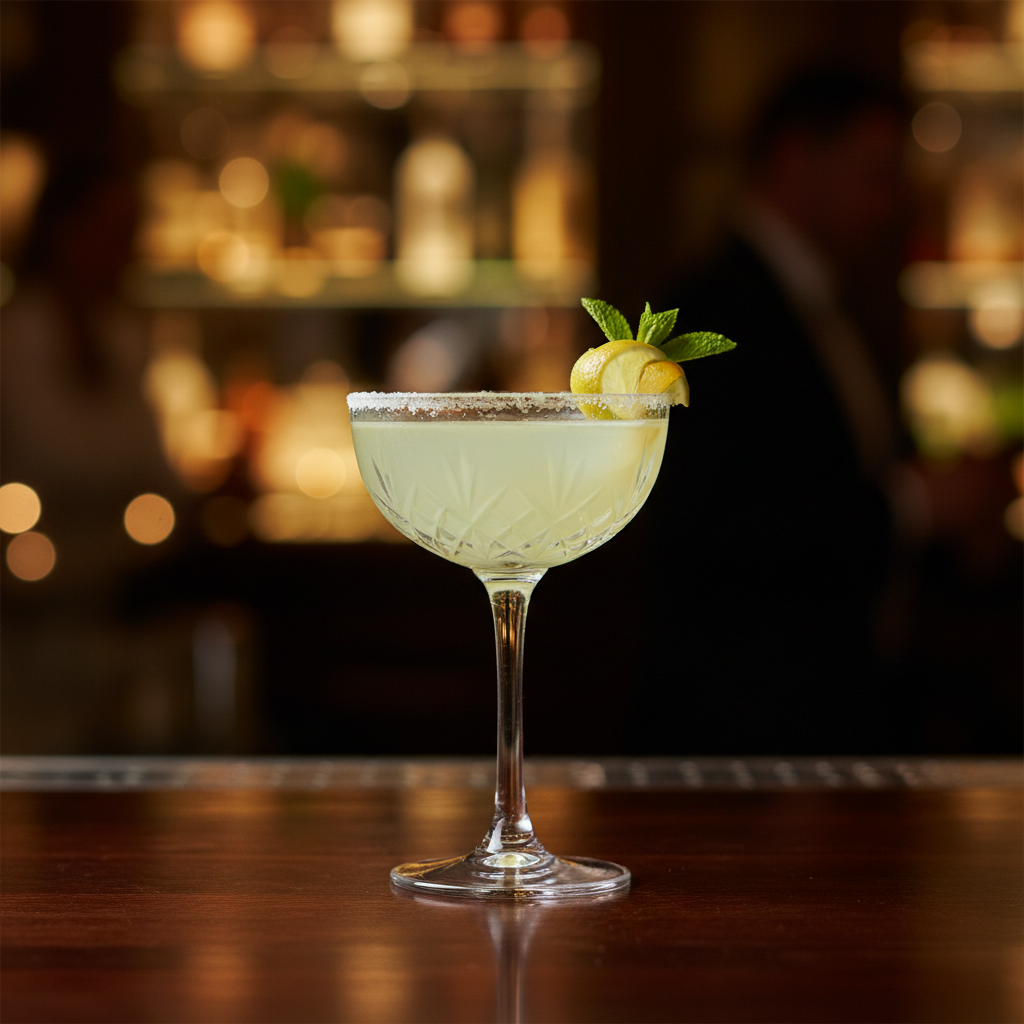
Ingredients
- 60 ml White Cuban Rum
- 20 ml Fresh lime juice
- 2 bar spoons Superfine sugar
Garnish: Optional lime wheel or lime zest twist
Elegant, simple, and endlessly refreshing, the Daiquiri is one of the purest expressions of rum in the cocktail world. With only three ingredients — white rum, fresh lime juice, and sugar — it showcases balance, precision, and technique. When made correctly, it is bright, dry, and razor-sharp, with just enough sweetness to frame the citrus and let the rum shine.
Far from the frozen, overly sweet versions that became popular later, the classic Daiquiri is a refined, shaken sour served straight up in a chilled cocktail glass. It is a benchmark drink for bartenders: if a bar can make a perfect Daiquiri, you can trust they understand balance and craftsmanship.
Light yet intense, the Daiquiri is ideal as an aperitif, a summer refresher, or simply a way to appreciate a good quality white rum in a structured, elegant format.
Instructions
Official Recipe:
- Chill a cocktail glass in the freezer or by filling it with ice and water while you prepare the drink.
- Add 60 ml white Cuban rum, 20 ml fresh lime juice, and 2 bar spoons of superfine sugar to a cocktail shaker.
- Stir the mixture briefly inside the shaker with a bar spoon to help dissolve as much of the sugar as possible before adding ice.
- Fill the shaker with solid ice cubes.
- Shake vigorously for about 10–15 seconds, until the shaker feels very cold and the mixture is well chilled and slightly diluted.
- Discard the ice and water from the chilled cocktail glass if you used it to pre-chill.
- Strain the cocktail through a fine strainer into the chilled cocktail glass to remove ice shards and undissolved sugar.
- Garnish optionally with a lime wheel or a thin twist of lime zest on the rim or floating on the surface.
Note: Superfine sugar is preferred because it dissolves quickly. If using regular granulated sugar, stir a bit longer before adding ice, or consider using a simple syrup instead.
Tips
- Use quality white rum: A clean, characterful Cuban-style white rum (or similar light rum) makes a huge difference. Avoid flavored or overly harsh rums.
- Always squeeze fresh limes: Bottled lime juice lacks the brightness and aromatic oils that define a great Daiquiri. Juice limes just before making the drink.
- Balance to taste: Limes vary in acidity and sweetness. If the drink tastes too sharp, add a small extra dash of sugar; if too sweet, a few more drops of lime.
- Prefer superfine sugar or syrup: Superfine sugar dissolves faster. Alternatively, use 10 ml of 1:1 simple syrup instead of sugar for a perfectly smooth texture.
- Shake hard and fast: A strong shake with plenty of ice ensures proper aeration, chilling, and dilution, giving the Daiquiri its silky texture.
- Serve very cold: The Daiquiri loses its edge as it warms up. Always use a well-chilled glass and serve immediately after straining.
- Keep it minimal: Avoid extra ingredients or decorations. The beauty of the classic Daiquiri is its precision and simplicity.
Classic Variations
- Hemingway Daiquiri: Adds grapefruit juice and maraschino liqueur, typically with less or no sugar, for a drier, more aromatic profile.
- Frozen Daiquiri: Blended with crushed ice, sometimes with fruit purees; more of a modern, dessert-style twist than a classic sour.
- Strawberry Daiquiri: A fruity variation using fresh or pureed strawberries, often blended; sweeter and more approachable.
- Banana Daiquiri: Combines rum with fresh or blended banana and lime juice, sometimes with a touch of cream or liqueur.
- Royal Daiquiri: A classic Daiquiri topped with a splash of Champagne or sparkling wine for an effervescent twist.
Flavor Profile
The first sip of a classic Daiquiri is bright and zesty, with a clean hit of fresh lime and a lightly sweet edge that softens the acidity. On the mid-palate, the character of the white rum comes forward: light, dry, and slightly grassy or sugarcane-like, wrapped in a smooth, silky texture from shaking.
The finish is crisp and refreshing, with lingering citrus notes and a dry, almost mineral quality that invites another sip. When perfectly balanced, no single element dominates; sweetness, sourness, and alcohol are seamlessly integrated.
History
The Daiquiri traces its origins to Cuba at the turn of the 20th century. It is widely attributed to Jennings Stockton Cox, an American engineer working near the village of Daiquirí, close to Santiago de Cuba. Faced with limited drink options, he reportedly combined local rum, lime, and sugar — classic Caribbean ingredients — creating the template for the modern Daiquiri.
The cocktail gained popularity among American visitors and naval officers stationed in Cuba. It was later refined and popularized at the famed El Floridita bar in Havana, where legendary bartender Constantino Ribalaigua Vert perfected various Daiquiri recipes and served them to literary figures like Ernest Hemingway.
Today, the Daiquiri is recognized as an official IBA (International Bartenders Association) cocktail and stands as one of the foundational rum sours in classic mixology. It remains a touchstone for bartenders worldwide, both as a test of skill and as a timeless, beautifully simple drink.
Cheers!