Negroni
A timeless Italian aperitivo that perfectly balances bitter, sweet, and botanical notes.
Ingredients
- 30 ml Gin
- 30 ml Bitter Campari
- 30 ml Sweet Red Vermouth
Garnish: Half orange slice
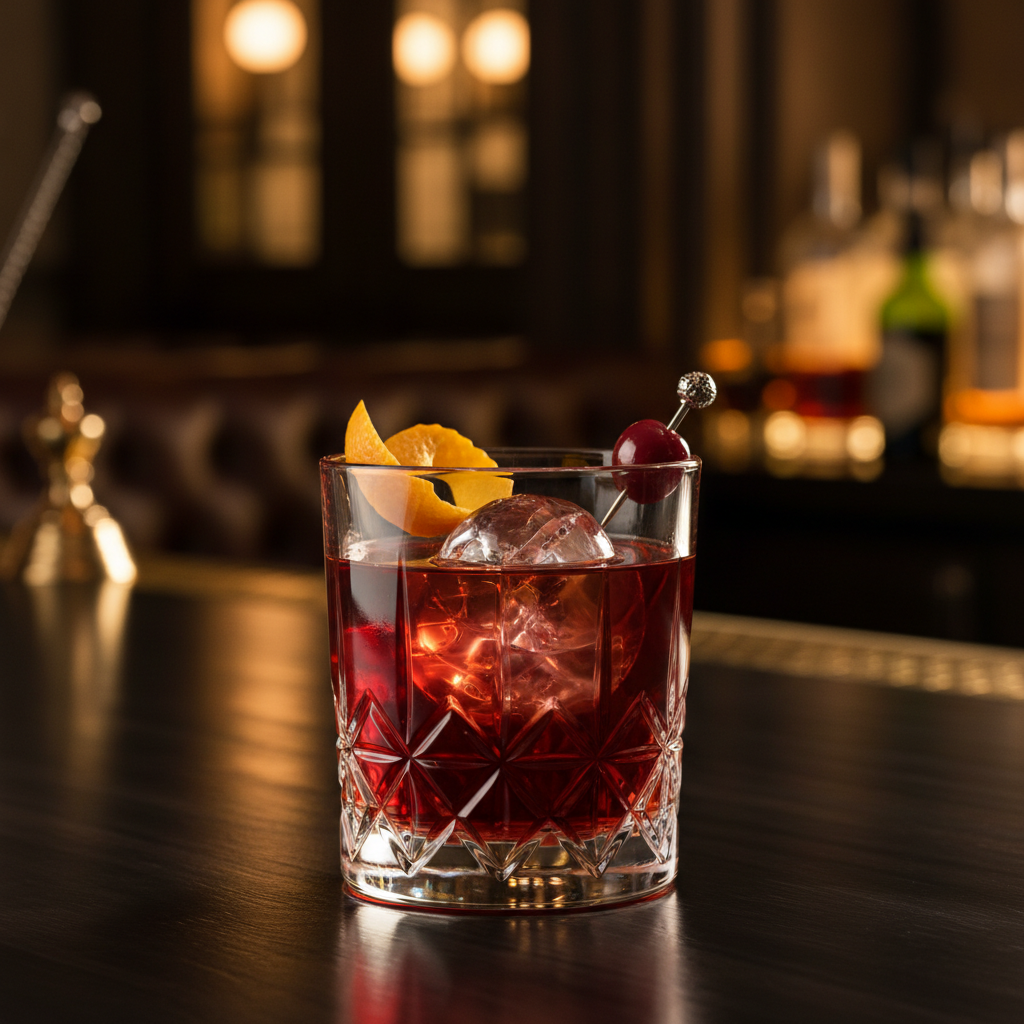
The Negroni is one of the most iconic Italian aperitivo cocktails, renowned for its perfect harmony of bitter, sweet, and herbal notes. With just three ingredients in equal parts, it delivers remarkable complexity in a deceptively simple format.
Built directly in the glass, the Negroni is a bartender’s benchmark: crystal clear, deeply colored, and beautifully aromatic. Its bold bitterness from Campari, rounded sweetness from red vermouth, and dry botanical backbone from gin make it a sophisticated choice for drinkers who appreciate character and balance.
Whether sipped before dinner to awaken the appetite or enjoyed as a slow evening drink, the Negroni has become a global classic and a pillar of modern cocktail culture.
Instructions
Official Recipe:
- Chill an Old Fashioned Glass by filling it with ice or placing it in the freezer for a few minutes.
- Fill the chilled Old Fashioned Glass with fresh ice cubes.
- Pour 30 ml gin, 30 ml bitter Campari, and 30 ml sweet red vermouth directly over the ice.
- Stir gently with a bar spoon for about 15–20 seconds to chill and slightly dilute the drink while maintaining clarity.
- Garnish with half an orange slice placed inside the glass against the ice or resting on the rim.
Note: The Negroni is traditionally built in the glass, but you can also stir it with ice in a mixing glass and strain over fresh ice for an extra-clear presentation.
Tips
- Use a robust gin: Choose a London Dry gin with pronounced juniper and citrus notes so it stands up to the bitterness of Campari and the sweetness of vermouth.
- Fresh, dense ice: Use large, solid ice cubes; they melt more slowly, keeping the Negroni cold while avoiding excessive dilution.
- Quality vermouth matters: Sweet red vermouth oxidizes quickly. Keep the bottle refrigerated and use it within a month for the best flavor.
- Balance by tweaking ratios: If the drink feels too bitter, reduce Campari slightly and increase vermouth. If it feels too sweet, increase gin or reduce vermouth.
- Express the orange oils: Before dropping the orange slice in, lightly squeeze or twist it over the glass to release aromatic oils onto the surface of the drink.
- Stir, don’t shake: Always stir to keep the drink clear and silky. Shaking would over-dilute and cloud the cocktail.
- Serve well-chilled: The Negroni shines when very cold. If your glass or room is warm, stir a bit longer to achieve proper chilling.
Classic Variations
- Negroni Sbagliato: Replace gin with sparkling wine (Prosecco) and build over ice in a Highball Glass for a lighter, bubbly version.
- Boulevardier: Substitute bourbon or rye whiskey for gin; richer, warmer, and ideal for cooler weather.
- White Negroni: Use a dry gin, gentian liqueur (such as Suze) instead of Campari, and dry or bianco vermouth for a paler, more floral profile.
- Old Pal: Mix rye whiskey, dry vermouth, and Campari in equal parts for a drier, spicier twist.
- Cardinale: Use dry vermouth instead of sweet red vermouth, yielding a drier, slightly sharper Negroni-style drink.
Flavor Profile
On the initial taste, the Negroni delivers a burst of bitter orange and herbal notes from Campari, supported by the dryness and juniper-forward character of gin. As it moves to the mid-palate, warmer spices, red fruit, and subtle sweetness from the vermouth emerge, softening the bitterness and adding depth.
The finish is long, pleasantly bitter, and slightly spicy, with lingering citrus peel, herbal complexity, and a gentle sweetness that invites another sip. Served properly chilled, the texture is smooth and slightly viscous, creating a luxurious mouthfeel.
History
The Negroni is widely believed to have been created in Florence, Italy, around 1919 at Caffè Casoni. According to the most accepted story, Count Camillo Negroni asked the bartender, Fosco Scarselli, to strengthen his favorite drink, the Americano, by replacing the soda water with gin.
Scarselli obliged, garnishing the drink with an orange slice instead of the Americano’s traditional lemon to mark the new creation. The resulting cocktail became popular among the Count’s circle and soon spread under the name “Negroni” in honor of its demanding patron.
Over the decades, the Negroni has evolved from a local Florentine specialty into a global classic, beloved by bartenders and cocktail enthusiasts alike. It is officially recognized as an IBA (International Bartenders Association) cocktail, cementing its status as one of the foundational drinks in the modern cocktail canon.
Cheers!