Dry Martini
The ultimate minimalist gin classic, the Dry Martini is a crystal-clear, spirit-forward cocktail that showcases elegance in a chilled glass.
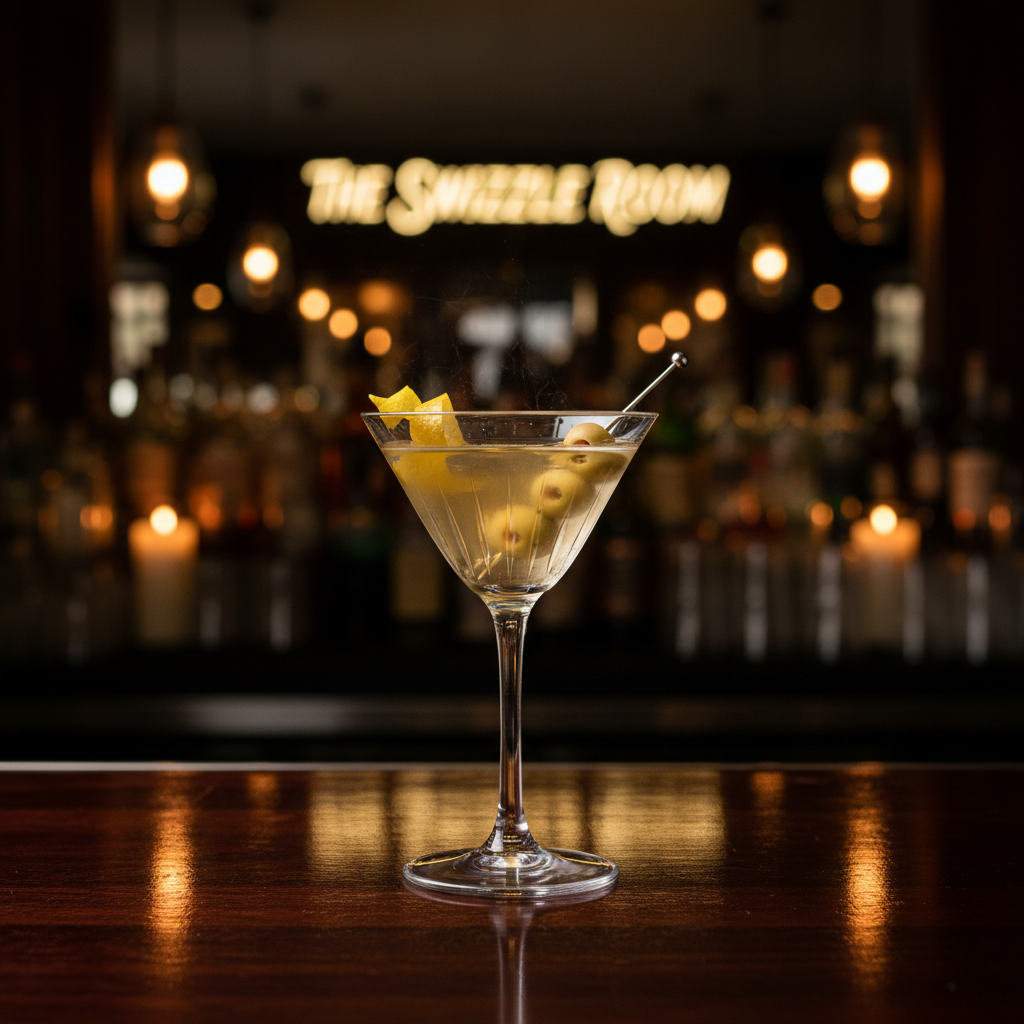
Ingredients
- 60 ml Gin
- 10 ml Dry Vermouth
Garnish: Lemon peel twist expressed over the surface, or a green olive on request
The Dry Martini is one of the most iconic cocktails in the world, a benchmark of elegance, simplicity, and precision. Composed of gin and dry vermouth, this crystal-clear drink is all about balance, temperature, and texture. When made well, it is silky, aromatic, and razor-sharp on the palate.
This cocktail is unapologetically spirit-forward, designed for those who appreciate the pure character of gin, subtly rounded by a touch of vermouth. Its clean, botanical profile makes it a perfect aperitif, sharpening the appetite and the senses before a meal.
The Dry Martini is also a canvas for personal preference: wetter or drier, with lemon twist or olive, shaken or stirred (though the classic is always stirred). Mastering it is a rite of passage for any serious bartender.
Instructions
Official Recipe:
- Chill a cocktail glass in the freezer or by filling it with ice and water while you prepare the drink.
- Fill a mixing glass with plenty of fresh ice cubes.
- Pour 60 ml of gin and 10 ml of dry vermouth into the mixing glass.
- Stir well for 20–30 seconds until the mixture is very cold and properly diluted.
- Discard the ice or water from the chilled cocktail glass if you used it to chill the glass.
- Strain the mixture into the chilled cocktail glass, aiming for a smooth, clear pour.
- Express the oil from a strip of lemon peel over the surface by gently twisting it, then either discard the peel or drop it in as garnish.
- Alternative: If requested, garnish with a green olive on a cocktail pick instead of lemon.
Note: The Dry Martini is all about precision. Small changes in dilution, temperature, or vermouth ratio will noticeably affect the final result.
Tips
- Use high-quality gin: The drink is almost entirely gin, so choose a premium London Dry or a style whose botanicals you really enjoy.
- Keep everything cold: Chill the glass, use solid, cold ice, and stir long enough. A warm martini loses its elegance instantly.
- Mind the dilution: Over-stirring will water it down, under-stirring will leave it harsh. Aim for a silky, cold texture without ice shards.
- Balance the vermouth: 10 ml is a classic IBA ratio, but you can adjust slightly to taste. Too little and the drink becomes flat; too much and the vermouth dominates.
- Express the citrus correctly: When using lemon, twist the peel skin-side down over the drink to release aromatic oils onto the surface.
- Choose your garnish with intent: Lemon twist gives a fresher, more aromatic profile; an olive adds a savory, briny touch.
- Store vermouth properly: Vermouth is fortified wine. Keep it refrigerated and use within a few weeks to maintain freshness.
Classic Variations
- Wet Martini: Increases the amount of dry vermouth for a softer, more aromatic profile.
- Dirty Martini: Adds olive brine to the mix and is usually garnished with olives, creating a savory, salty twist.
- Vodka Martini: Replaces gin with vodka for a cleaner, more neutral spirit character.
- Vesper Martini: Gin, vodka, and Kina-style aperitif wine (now often replaced with Lillet), made famous by James Bond.
- Perfect Martini: Uses a mix of dry and sweet vermouth for a more complex, slightly rounder flavor.
Flavor Profile
On the first sip, the Dry Martini is crisp, cold, and intensely aromatic, with juniper and citrus notes from the gin leading the way. The mid-palate reveals subtle herbal and floral tones contributed by the dry vermouth, smoothing the edges of the spirit and adding complexity.
The finish is long, dry, and clean, often lifted by the citrus oils of the lemon twist or given a savory edge by an olive. Overall, it is a bone-dry, spirit-forward cocktail designed for slow sipping and appreciation.
History
The Martini is one of the most debated cocktails in terms of origin, with several competing stories tracing its birth to the late 19th and early 20th centuries. Early versions, such as the Martinez, were sweeter and relied more heavily on vermouth and liqueurs.
Over time, tastes shifted toward drier, more spirit-forward drinks, and the Dry Martini emerged as a streamlined combination of gin and dry vermouth. By the mid-20th century, it had become a symbol of sophistication, frequently associated with Hollywood stars, writers, and fictional characters like James Bond.
The Dry Martini is recognized as an official IBA cocktail, and its IBA recipe specifies a stirred preparation with gin, dry vermouth, and a lemon peel or olive garnish. Despite its apparent simplicity, it remains one of the most respected tests of a bartender’s skill.
Cheers!