Bee’s Knees
A bright, honeyed gin sour that balances citrus zing with silky sweetness.
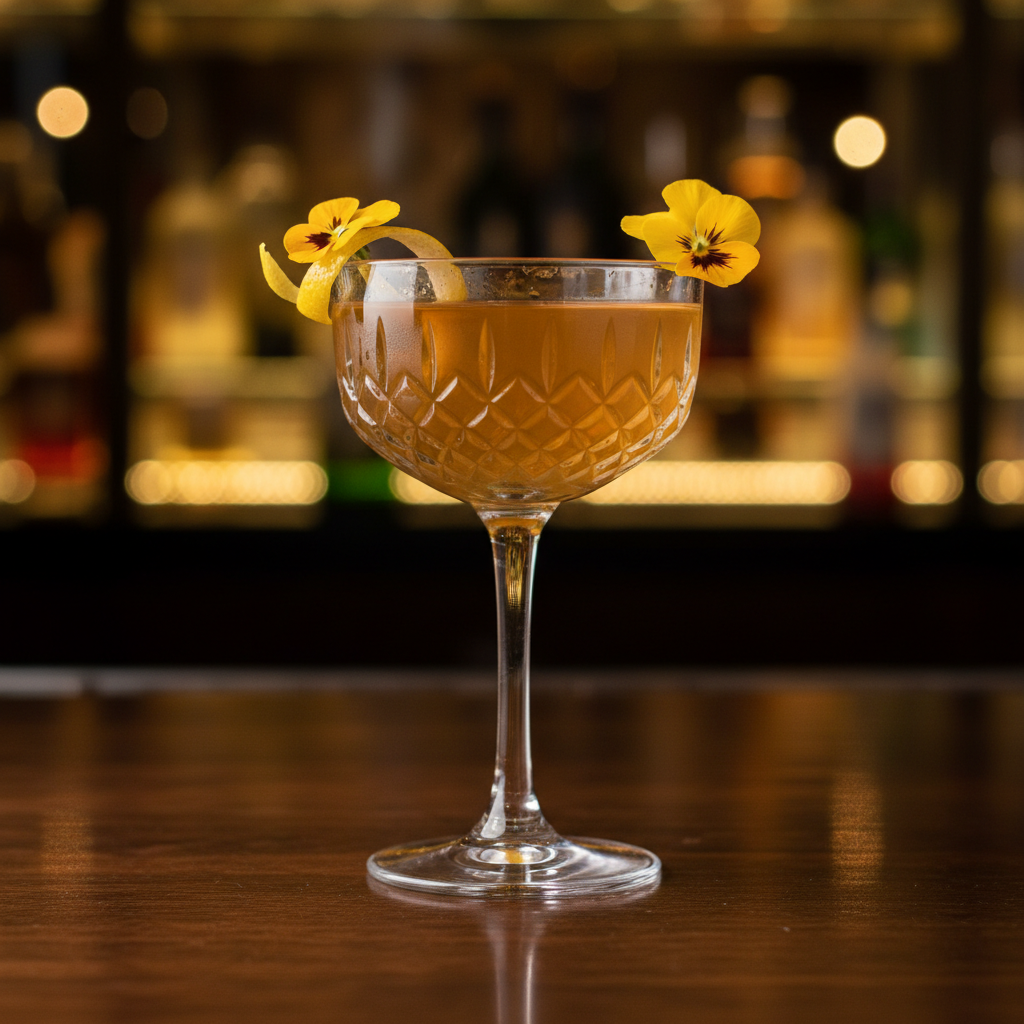
Ingredients
- 52.5 ml Dry Gin
- 2 teaspoons Honey Syrup
- 22.5 ml Fresh Lemon Juice
- 22.5 ml Fresh Orange Juice
Garnish: Lemon or orange zest, expressed over the drink and placed on the rim or in the glass
The Bee’s Knees is a classic Prohibition-era gin cocktail that showcases how simple ingredients can create elegant complexity. Built on a base of dry gin, bright citrus, and silky honey syrup, it offers a beautifully rounded alternative to the traditional gin sour.
Its character is defined by a vibrant balance: lemon and orange juice bring freshness and lift, while honey softens the edges of the gin with a floral, velvety sweetness. The result is a cocktail that is both refreshing and comforting, with a natural richness that sugar alone cannot match.
Recognized as an official IBA (International Bartenders Association) cocktail, the Bee’s Knees has become a staple in modern cocktail bars worldwide. It is approachable, expressive, and endlessly customizable through your choice of gin and honey.
Instructions
Official Recipe:
- Chill a cocktail glass in the freezer or by filling it with ice and water while you prepare the drink.
- Combine the honey syrup, fresh lemon juice, and fresh orange juice in a shaker tin.
- Stir briefly inside the shaker with a bar spoon to ensure the honey syrup is fully dissolved into the citrus.
- Add the dry gin to the shaker, then fill the shaker with plenty of solid ice.
- Shake vigorously for about 10–12 seconds, until the shaker feels very cold and the mixture is well aerated.
- Discard the ice and water from the chilled cocktail glass if you used them for chilling.
- Strain the cocktail into the chilled cocktail glass using a Hawthorne strainer; optionally fine strain through a mesh strainer for extra smoothness.
- Garnish with a strip of lemon or orange zest, expressing the oils over the surface of the drink before placing it on the rim or in the glass.
Note: If your honey syrup is very thick or the environment is cold, take extra time to dissolve it fully with the citrus juices before adding ice and gin.
Tips
- Use quality gin: Choose a dry gin with a clear botanical profile. London Dry styles emphasize juniper and citrus, which pair beautifully with honey and fresh citrus.
- Balance your honey syrup: A common ratio is 1:1 honey to water by volume. For a richer texture, use 2:1. Always ensure it is fully liquid and pourable.
- Fresh citrus only: Bottled juices will flatten the flavor. Squeeze lemons and oranges just before mixing and fine strain to remove excess pulp if desired.
- Temperature matters: Shake with plenty of cold, dense ice to achieve proper chilling and dilution. Under-shaking will leave the drink harsh; over-shaking can water it down.
- Adjust sweetness: If the cocktail tastes too sharp, add a small dash (5 ml) more honey syrup. If it is too sweet, increase the lemon slightly. Always taste and fine-tune.
- Express the zest: When garnishing, twist the citrus peel over the glass to release aromatic oils. This adds a fresh, fragrant top note to every sip.
- Experiment with honey types: Orange blossom, acacia, wildflower, or thyme honey will each lend a different aromatic nuance to the drink.
Classic Variations
- Classic Bee’s Knees (lemon only): Made with only fresh lemon juice instead of a lemon–orange split, for a sharper and more focused sour profile.
- Lavender Bee’s Knees: Infuse the honey syrup with a small amount of dried lavender for a floral, aromatic twist. Use sparingly to avoid bitterness.
- Herbal Bee’s Knees: Shake with a few fresh thyme or rosemary sprigs, or lightly muddle them before adding ice for a savory, herbal layer.
- Spiced Bee’s Knees: Add a dash of aromatic bitters or a clove- or cinnamon-infused honey syrup to create a warming, autumnal version.
- Bee’s Knees Fizz: Top the strained cocktail with a splash of chilled soda water or sparkling wine for a lighter, bubbly interpretation.
Flavor Profile
On the first sip, the Bee’s Knees delivers bright citrus aromas, supported by delicate floral notes from the honey and the gin’s botanicals. The initial taste is zesty and refreshing, with lemon and orange leading the way.
On the mid-palate, the honey rounds out the edges, creating a smooth, slightly creamy texture that softens the gin’s juniper and spice. The sweetness is present but not overpowering when properly balanced.
The finish is clean and dry, with lingering hints of citrus peel, subtle floral tones from both honey and gin, and a gentle warmth from the alcohol. It is a cocktail that invites slow, appreciative sipping.
History
The Bee’s Knees dates back to the Prohibition era in the United States (1920–1933), a time when cocktails were often crafted to mask the rough edges of illicit, homemade spirits. The phrase “bee’s knees” was popular slang of the time, meaning “the best” or “top-notch,” and the drink was likely named to reflect its quality.
Bartender Frank Meier, who worked at the Hôtel Ritz in Paris, is often credited with popularizing the recipe in the 1920s, though the exact origin remains debated. What is clear is that combining honey and citrus with gin created a far more refined drink than many of its contemporaries.
Today, the Bee’s Knees is recognized as an official IBA (International Bartenders Association) cocktail and is a beloved staple of the modern classic repertoire. Its simplicity, versatility, and historical charm ensure that it maintains a prominent place on cocktail menus around the world.
Cheers!